Spread
In the 15th century, the Renaissance spread rapidly from its birthplace in Florence to the rest of Italy and soon to the rest of Europe. The invention of the printing press by German printer Johannes Gutenberg allowed the rapid transmission of these new ideas. As it spread, its ideas diversified and changed, being adapted to local culture. In the 20th century, scholars began to break the Renaissance into regional and national movements.
England
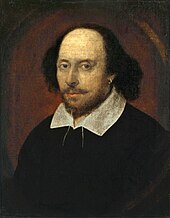
In England, the sixteenth century marked the beginning of the English Renaissance with the work of writers William Shakespeare, Christopher Marlowe, Edmund Spenser, Sir Thomas More, Francis Bacon, Sir Philip Sidney, as well as great artists, architects (such as Inigo Jones who introduced Italianate architecture to England), and composers such as Thomas Tallis, John Taverner, and William Byrd.
France
The word "Renaissance" is borrowed from the French language, where it means "re-birth". It was first used in the eighteenth century and was later popularized by French historian Jules Michelet (1798–1874) in his 1855 work, Histoire de France (History of France).
In 1495 the Italian Renaissance arrived in France, imported by King Charles VIII after his invasion of Italy. A factor that promoted the spread of secularism was the inability of the Church to offer assistance against the Black Death. Francis I imported Italian art and artists, including Leonardo da Vinci, and built ornate palaces at great expense. Writers such as François Rabelais, Pierre de Ronsard, Joachim du Bellay and Michel de Montaigne, painters such as Jean Clouet, and musicians such as Jean Mouton also borrowed from the spirit of the Renaissance.
In 1533, a fourteen-year-old Caterina de' Medici (1519–1589), born in Florence to Lorenzo de' Medici, Duke of Urbino and Madeleine de la Tour d'Auvergne, married Henry II of France, second son of King Francis I and Queen Claude. Though she became famous and infamous for her role in France's religious wars, she made a direct contribution in bringing arts, sciences and music (including the origins of ballet) to the French court from her native Florence.
Germany
In the second half of the 15th century, the Renaissance spirit spread to Germany and the Low Countries, where the development of the printing press (ca. 1450) and Renaissance artists such as Albrecht Dürer (1471–1528) predated the influence from Italy. In the early Protestant areas of the country humanism became closely linked to the turmoil of the Protestant Reformation, and the art and writing of the German Renaissance frequently reflected this dispute. However, the Gothic style and medieval scholastic philosophy remained exclusively until the turn of the 16th century. Emperor Maximilian I of Habsburg (ruling 1493–1519) was the first truly Renaissance monarch of the Holy Roman Empire.
Hungary
After Italy, Hungary was the first European country where the Renaissance appeared. The Renaissance style came directly from Italy during the Quattrocento to Hungary first in the Central European region, thanks to the development of early Hungarian-Italian relationships—not only in dynastic connections, but also in cultural, humanistic and commercial relations—growing in strength from the 14th century. The relationship between Hungarian and Italian Gothic styles was a second reason—exaggerated breakthrough of walls is avoided, preferring clean and light structures. Large-scale building schemes provided ample and long term work for the artists, for example, the building of the Friss (New) Castle in Buda, the castles of Visegrád, Tata and Várpalota. In Sigismund's court there were patrons such as Pipo Spano, a descendant of the Scolari family of Florence, who invited Manetto Ammanatini and Masolino da Pannicale to Hungary.
The new Italian trend combined with existing national traditions to create a particular local Renaissance art. Acceptance of Renaissance art was furthered by the continuous arrival of humanist thought in the country. Many young Hungarians studying at Italian universities came closer to the Florentine humanist center, so a direct connection with Florence evolved. The growing number of Italian traders moving to Hungary, specially to Buda, helped this process. New thoughts were carried by the humanist prelates, among them Vitéz János, archbishop of Esztergom, one of the founders of Hungarian humanism. During the long reign of emperor Sigismund of Luxemburg the Royal Castle of Buda became probably the largest Gothic palace of the late Middle Ages. King Matthias Corvinus (r. 1458–1490) rebuilt the palace in early Renaissance style and further expanded it.
After the marriage in 1476 of King Matthias to Beatrice of Naples, Buda became one of the most important artistic centres of the Renaissance north of the Alps. The most important humanists living in Matthias' court were Antonio Bonfini and the famous Hungarian poet Janus Pannonius. András Hess set up a printing press in Buda in 1472. Matthias Corvinus's library, the Bibliotheca Corviniana, was Europe's greatest collections of secular books: historical chronicles, philosophic and scientific works in the 15th century. His library was second only in size to the Vatican Library. (However, the Vatican Library mainly contained Bibles and religious materials.) In 1489, Bartolomeo della Fonte of Florence wrote that Lorenzo de' Medici founded his own Greek-Latin library encouraged by the example of the Hungarian king. Corvinus's library is part of UNESCO World Heritage.
Matthias started at least two major building projects. The works in Buda and Visegrád began in about 1479. Two new wings and a hanging garden were built at the royal castle of Buda, and the palace at Visegrád was rebuilt in Renaissance style. Matthias appointed the Italian Chimenti Camicia and the Dalmatian Giovanni Dalmata to direct these projects. Matthias commissioned the leading Italian artists of his age to embellish his palaces: for instance, the sculptor Benedetto da Majano and the painters Filippino Lippi and Andrea Mantegna worked for him. A copy of Mantegna's portrait of Matthias survived. Matthias also hired the Italian military engineer Aristotele Fioravanti to direct the rebuilding of the forts along the southern frontier. He had new monasteries built in Late Gothic style for the Franciscans in Kolozsvár, Szeged and Hunyad, and for the Paulines in Fejéregyháza. In the spring of 1485, Leonardo da Vinci travelled to Hungary on behalf of Sforza to meet king Matthias Corvinus, and was commissioned by him to paint a Madonna.
Matthias enjoyed the company of Humanists and had lively discussions on various topics with them. The fame of his magnanimity encouraged many scholars—mostly Italian—to settle in Buda. Antonio Bonfini, Pietro Ranzano, Bartolomeo Fonzio, and Francesco Bandini spent many years in Matthias's court. This circle of educated men introduced the ideas of Neoplatonism to Hungary. Like all intellectuals of his age, Matthias was convinced that the movements and combinations of the stars and planets exercised influence on individuals' life and on the history of nations. Galeotto Marzio described him as "king and astrologer", and Antonio Bonfini said Matthias "never did anything without consulting the stars". Upon his request, the famous astronomers of the age, Johannes Regiomontanus and Marcin Bylica, set up an observatory in Buda and installed it with astrolabes and celestial globes. Regiomontanus dedicated his book on navigation that was used by Christopher Columbus to Matthias.
Other important figures of Hungarian Renaissance include Bálint Balassi (poet), Sebestyén Tinódi Lantos (poet), Bálint Bakfark (composer and lutenist), and Master MS (fresco painter).
Renaissance in the Low countries
Culture in the Netherlands at the end of the 15th century was influenced by the Italian Renaissance through trade via Bruges, which made Flanders wealthy. Its nobles commissioned artists who became known across Europe. In science, the anatomist Andreas Vesalius led the way; in cartography, Gerardus Mercator's map assisted explorers and navigators. In art, Dutch and Flemish Renaissance painting ranged from the strange work of Hieronymus Bosch to the everyday life depictions of Pieter Brueghel the Elder.
Northern Europe
The Renaissance in Northern Europe has been termed the "Northern Renaissance". While Renaissance ideas were moving north from Italy, there was a simultaneous southward spread of some areas of innovation, particularly in music. The music of the 15th-century Burgundian School defined the beginning of the Renaissance in music, and the polyphony of the Netherlanders, as it moved with the musicians themselves into Italy, formed the core of the first true international style in music since the standardization of Gregorian Chant in the 9th century. The culmination of the Netherlandish school was in the music of the Italian composer Palestrina. At the end of the 16th century Italy again became a center of musical innovation, with the development of the polychoral style of the Venetian School, which spread northward into Germany around 1600.
The paintings of the Italian Renaissance differed from those of the Northern Renaissance. Italian Renaissance artists were among the first to paint secular scenes, breaking away from the purely religious art of medieval painters. Northern Renaissance artists initially remained focused on religious subjects, such as the contemporary religious upheaval portrayed by Albrecht Dürer. Later, the works of Pieter Bruegel influenced artists to paint scenes of daily life rather than religious or classical themes. It was also during the Northern Renaissance that Flemish brothers Hubert and Jan van Eyck perfected the oil painting technique, which enabled artists to produce strong colors on a hard surface that could survive for centuries. A feature of the Northern Renaissance was its use of the vernacular in place of Latin or Greek, which allowed greater freedom of expression. This movement had started in Italy with the decisive influence of Dante Alighieri on the development of vernacular languages; in fact the focus on writing in Italian has neglected a major source of Florentine ideas expressed in Latin. The spread of the printing press technology boosted the Renaissance in Northern Europe as elsewhere, with Venice becoming a world center of printing.
Poland
An early Italian humanist who came to Poland in the mid-15th century was Filippo Buonaccorsi. Many Italian artists came to Poland with Bona Sforza of Milan, when she married King Sigismund I the Old in 1518. This was supported by temporarily strengthened monarchies in both areas, as well as by newly established universities. The Polish Renaissance lasted from the late 15th to the late 16th century and was the Golden Age of Polish culture. Ruled by the Jagiellon dynasty, the Kingdom of Poland (from 1569 known as the Polish–Lithuanian Commonwealth) actively participated in the broad European Renaissance. The multi-national Polish state experienced a substantial period of cultural growth thanks in part to a century without major wars – aside from conflicts in the sparsely populated eastern and southern borderlands. The Reformation spread peacefully throughout the country (giving rise to the Polish Brethren), while living conditions improved, cities grew, and exports of agricultural products enriched the population, especially the nobility (szlachta) who gained dominance in the new political system of Golden Liberty. The Polish Renaissance architecture has three periods of development.
The greatest monument of this style in the territory of the former Duchy of Pomerania is the Ducal Castle in Szczecin.
Portugal
Although Italian Renaissance had a modest impact in Portuguese arts, Portugal was influential in broadening the European worldview, stimulating humanist inquiry. Renaissance arrived through the influence of wealthy Italian and Flemish merchants who invested in the profitable commerce overseas. As the pioneer headquarters of European exploration, Lisbon flourished in the late 15th century, attracting experts who made several breakthroughs in mathematics, astronomy and naval technology, including Pedro Nunes, João de Castro, Abraham Zacuto and Martin Behaim. Cartographers Pedro Reinel, Lopo Homem, Estêvão Gomes and Diogo Ribeiro made crucial advances in mapping the world. Apothecary Tomé Pires and physicians Garcia de Orta and Cristóvão da Costa collected and published works on plants and medicines, soon translated by Flemish pioneer botanist Carolus Clusius.
In architecture, the huge profits of the spice trade financed a sumptuous composite style in the first decades of the 16th century, the Manueline, incorporating maritime elements. The primary painters were Nuno Gonçalves, Gregório Lopes and Vasco Fernandes. In music, Pedro de Escobar and Duarte Lobo produced four songbooks, including the Cancioneiro de Elvas. In literature, Sá de Miranda introduced Italian forms of verse. Bernardim Ribeiro developed pastoral romance, plays by Gil Vicente fused it with popular culture, reporting the changing times, and Luís de Camões inscribed the Portuguese feats overseas in the epic poem Os Lusíadas. Travel literature especially flourished: João de Barros, Castanheda, António Galvão, Gaspar Correia, Duarte Barbosa, and Fernão Mendes Pinto, among others, described new lands and were translated and spread with the new printing press. After joining the Portuguese exploration of Brazil in 1500, Amerigo Vespucci coined the term New World, in his letters to Lorenzo di Pierfrancesco de' Medici.
The intense international exchange produced several cosmopolitan humanist scholars, including Francisco de Holanda, André de Resende and Damião de Góis, a friend of Erasmus who wrote with rare independence on the reign of King Manuel I. Diogo and André de Gouveia made relevant teaching reforms via France. Foreign news and products in the Portuguese factory in Antwerp attracted the interest of Thomas More and Albrecht Dürer to the wider world. There, profits and know-how helped nurture the Dutch Renaissance and Golden Age, especially after the arrival of the wealthy cultured Jewish community expelled from Portugal.
Russia
Renaissance trends from Italy and Central Europe influenced Russia in many ways. Their influence was rather limited, however, due to the large distances between Russia and the main European cultural centers and the strong adherence of Russians to their Orthodox traditions and Byzantine legacy.
Prince Ivan III introduced Renaissance architecture to Russia by inviting a number of architects from Italy, who brought new construction techniques and some Renaissance style elements with them, while in general following the traditional designs of Russian architecture. In 1475 the Bolognese architect Aristotele Fioravanti came to rebuild the Cathedral of the Dormition in the Moscow Kremlin, which had been damaged in an earthquake. Fioravanti was given the 12th-century Vladimir Cathedral as a model, and he produced a design combining traditional Russian style with a Renaissance sense of spaciousness, proportion and symmetry.
In 1485 Ivan III commissioned the building of the royal residence, Terem Palace, within the Kremlin, with Aloisio da Milano as the architect of the first three floors. He and other Italian architects also contributed to the construction of the Kremlin walls and towers. The small banquet hall of the Russian Tsars, called the Palace of Facets because of its facetted upper story, is the work of two Italians, Marco Ruffo and Pietro Solario, and shows a more Italian style. In 1505, an Italian known in Russia as Aleviz Novyi or Aleviz Fryazin arrived in Moscow. He may have been the Venetian sculptor, Alevisio Lamberti da Montagne. He built twelve churches for Ivan III, including the Cathedral of the Archangel, a building remarkable for the successful blending of Russian tradition, Orthodox requirements and Renaissance style. It is believed that the Cathedral of the Metropolitan Peter in Vysokopetrovsky Monastery, another work of Aleviz Novyi, later served as an inspiration for the so-called octagon-on-tetragon architectural form in the Moscow Baroque of the late 17th century.
Between the early 16th and the late 17th centuries, an original tradition of stone tented roof architecture developed in Russia. It was quite unique and different from the contemporary Renaissance architecture elsewhere in Europe, though some research terms the style 'Russian Gothic' and compares it with the European Gothic architecture of the earlier period. The Italians, with their advanced technology, may have influenced the invention of the stone tented roof (the wooden tents were known in Russia and Europe long before). According to one hypothesis, an Italian architect called Petrok Maly may have been an author of the Ascension Church in Kolomenskoye, one of the earliest and most prominent tented roof churches.
By the 17th century the influence of Renaissance painting resulted in Russian icons becoming slightly more realistic, while still following most of the old icon painting canons, as seen in the works of Bogdan Saltanov, Simon Ushakov, Gury Nikitin, Karp Zolotaryov and other Russian artists of the era. Gradually the new type of secular portrait painting appeared, called parsúna (from "persona" – person), which was transitional style between abstract iconographics and real paintings.
In the mid 16th-century Russians adopted printing from Central Europe, with Ivan Fyodorov being the first known Russian printer. In the 17th century printing became widespread, and woodcuts became especially popular. That led to the development of a special form of folk art known as lubok printing, which persisted in Russia well into the 19th century.
A number of technologies from the European Renaissance period were adopted by Russia rather early and subsequently perfected to become a part of a strong domestic tradition. Mostly these were military technologies, such as cannon casting adopted by at least the 15th century. The Tsar Cannon, which is the world's largest bombard by caliber, is a masterpiece of Russian cannon making. It was cast in 1586 by Andrey Chokhov and is notable for its rich, decorative relief. Another technology, that according to one hypothesis originally was brought from Europe by the Italians, resulted in the development of vodka, the national beverage of Russia. As early as 1386 Genoese ambassadors brought the first aqua vitae ("water of life") to Moscow and presented it to Grand Duke Dmitry Donskoy. The Genoese likely developed this beverage with the help of the alchemists of Provence, who used an Arab-invented distillation apparatus to convert grape must into alcohol. A Moscovite monk called Isidore used this technology to produce the first original Russian vodka c. 1430.
Spain
The Renaissance arrived in the Iberian peninsula through the Mediterranean possessions of the Aragonese Crown and the city of Valencia. Many early Spanish Renaissance writers come from the Kingdom of Aragon, including Ausiàs March and Joanot Martorell. In the Kingdom of Castile, the early Renaissance was heavily influenced by the Italian humanism, starting with writers and poets such as the Marquis of Santillana, who introduced the new Italian poetry to Spain in the early 15th century. Other writers, such as Jorge Manrique, Fernando de Rojas, Juan del Encina, Juan Boscán Almogáver and Garcilaso de la Vega, kept a close resemblance to the Italian canon. Miguel de Cervantes's masterpiece Don Quixote is credited as the first Western novel. Renaissance humanism flourished in the early 16th century, with influential writers such as philosopher Juan Luis Vives, grammarian Antonio de Nebrija and natural historian Pedro de Mexía.
Later Spanish Renaissance tended towards religious themes and mysticism, with poets such as fray Luis de León, Teresa of Ávila and John of the Cross, and treated issues related to the exploration of the New World, with chroniclers and writers such as Inca Garcilaso de la Vega and Bartolomé de las Casas, giving rise to a body of work, now known as Spanish Renaissance literature. The late Renaissance in Spain produced artists such as El Greco and composers such as Tomás Luis de Victoria and Antonio de Cabezón.
Further countries
- Renaissance in Croatia
- Renaissance in Scotland


Comments
Post a Comment